


Discussions allow learners and other users to communicate and engage with course content directly within the learning application. BenchPrep supports two primary types of discussions: Public Discussions and Private Discussions.
Public Discussions allow users to participate in conversations that are visible to other learners, while Private Discussions provide closed discussion groups that are limited to invited participants.
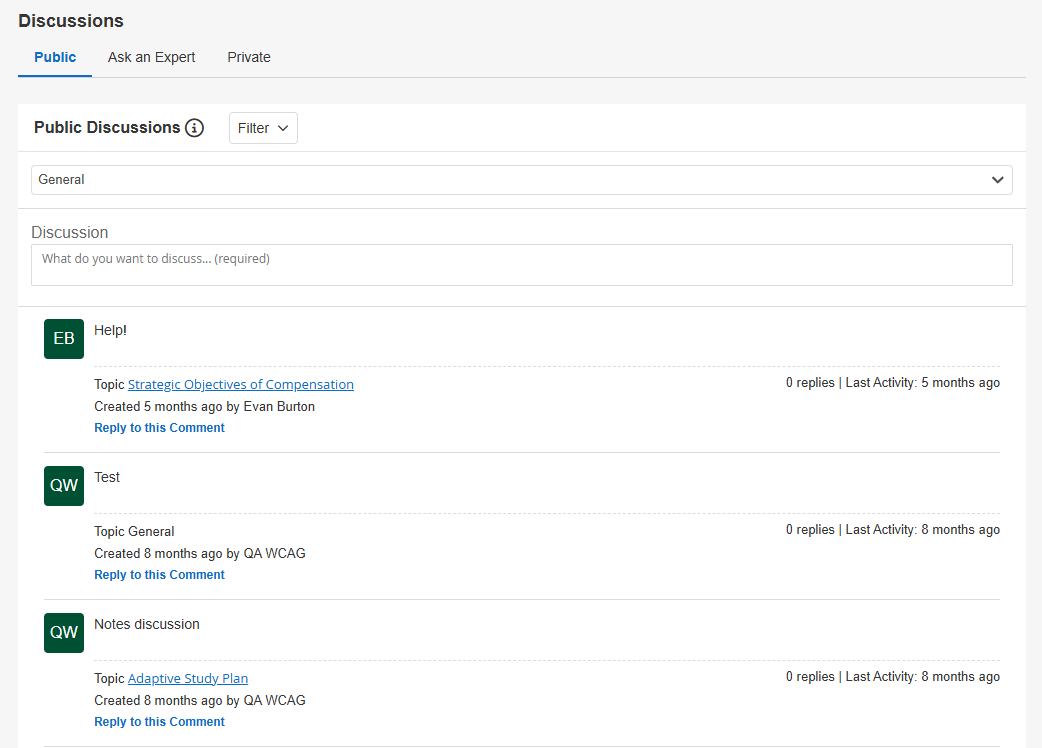
Public Discussions allow users to leave and reply to public comments within:
-
Lessons
-
Questions
-
The Discussions Page
|
Public Discussions: Learner Experience |
Requirements |
How To Configure |
|
|
See Public Discussions for additional information and instructions. |
Discussion Visibility: Public Discussions are visible to users with access to the same course, regardless of their Branch membership. While Public Discussions can be enabled or disabled at the Tenant, Course, and Branch levels, these settings control feature availability and do not restrict discussion visibility by Branch.
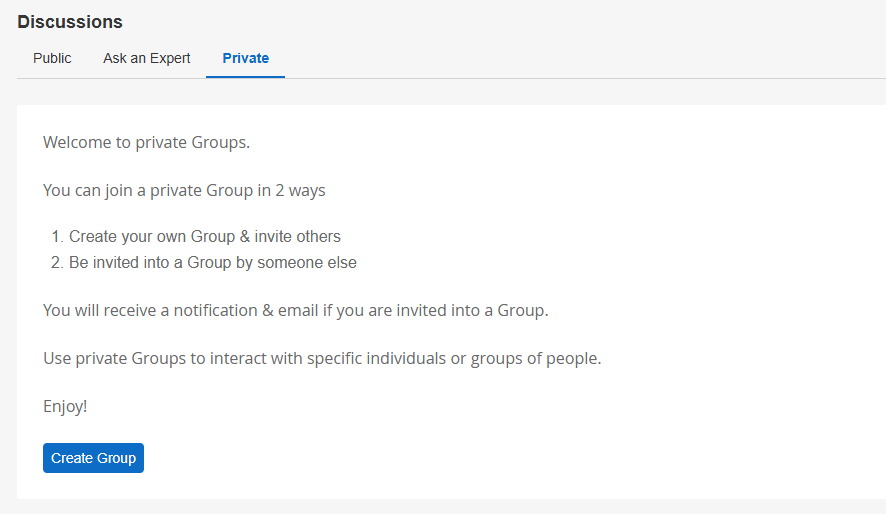
Private Discussions allow users to communicate in closed discussion groups with selected participants. Unlike Public Discussions, only users who are invited to a private discussion can participate in that discussion.
There are two separate feature accesses for Private Discussions:
- Private Discussions (created by admins/instructors): Controls private discussions initiated by users with the Create private discussions with learners permission.
- Private Discussions (created by learners): Controls whether learners can create their own private discussion groups.
|
Private Discussions: Learner Experience |
Requirements |
How To Configure |
|
For private discussions created by admins/instructors:
For private discussions created by learners:
Additional requirements:
|
For private discussions created by admins/instructors:
For private discussions created by learners:
See Private Discussions for complete requirements and instructions. |
Discussion Visibility: Private Discussions are only visible to invited participants within the same Branch. Unlike Public Discussions, having access to the same course does not automatically provide access to a private discussion. Feature access settings control the availability of private discussions, while participation is determined by group membership.
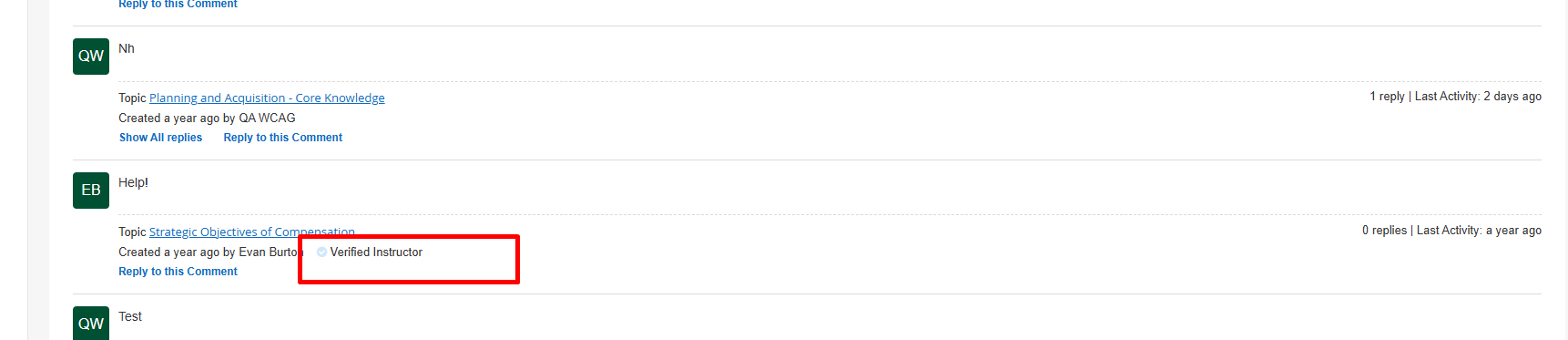
Within Public Discussions, certain users may display a Verified Instructor checkmark alongside their responses. This designation helps learners identify responses from instructors or other designated users.
The Verified Instructor designation is controlled through the Manage Discussion Messages permission (manage:discussion_messages) assigned to a custom role.
Users with this permission can respond to questions within Ask an Expert and display the Verified Instructor designation when responding to Public Discussions.
Configuring Verified Instructors
- Open the appropriate custom role in Console.
- Add the Manage Discussion Messages permission (manage:discussion_messages) to the role.
- Save the role configuration.
- Assign the custom role to the appropriate user at the desired scope.
- Confirm that the user has access to the course where they will participate in discussions.
The permission can be assigned at the Tenant, Content Package, Branch, or Group scope.
Note: Assigning this permission does not automatically grant access to a course. Users must also have access to the relevant course to participate in discussions. The Manage Discussion Messages permission is separate from the Create private discussions with learners permission used for instructor-created Private Discussions.
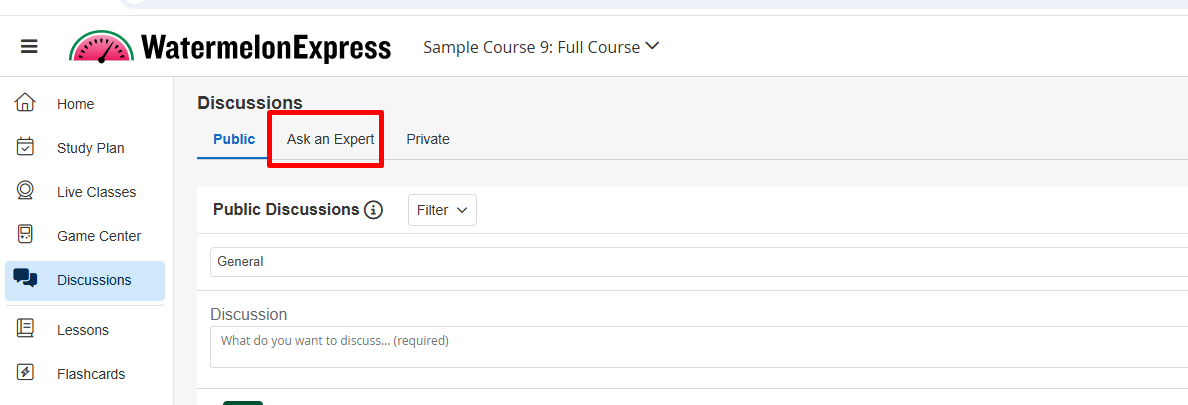
In addition to Public and Private Discussions, the Learning Application supports an optional Ask an Expert experience. When enabled, learners can submit questions through the Ask an Expert tab within Discussions.
Learners can follow up on their own questions but cannot respond to questions submitted by other learners. Users with the Manage Discussion Messages permission (manage:discussion_messages) can respond to learner questions.
Discussion Visibility: Like Public Discussions, Ask an Expert questions and responses are visible to users with access to the same course, regardless of Branch or Group membership. Feature access settings control where Ask an Expert is available but do not restrict discussion visibility to a particular Branch or Group.
Configuration: Ask an Expert is managed through feature access settings at the Tenant, Course, and Branch/Institution levels. By default, the feature is OFF at the Tenant and Course levels and ON at the Branch/Institution level. To make Ask an Expert available, enable the feature at both the Tenant and Course levels. Once enabled, the feature is available across Branches/Institutions by default unless it is turned OFF for a specific Branch/Institution.
Note: Ask an Expert does not currently provide dedicated notifications to instructors when learners submit new questions.
Managing Discussions
Public Discussions can be reviewed and moderated in BluePrint. For instructions on viewing, responding to, editing, or deleting discussion messages, see Moderating Public Discussions.
NOTE: Currently, the Discussions feature is not available within Asset-Based Courses. For BenchPrep Courses, Assets can be embedded within lessons to allow for discussion within the Lesson modules.


